Key takeaways
- Do not use weight or fibre name as a complete comfort specification.
- Review opacity on the intended colour and garment.
- Add lining only after identifying the actual coverage problem.
Translate “breathable” into a question
Buyers often use one word for several experiences: air passing through cloth, moisture moving away, drying or the perceived warmth of a whole outfit. These are not interchangeable claims. Ask which experience matters for the customer and whether it requires laboratory evaluation, wear assessment or both. The AATCC: Standard Test Methods and Procedures directory lists distinct textile methods; it is not a universal comfort score.
A garment includes seams, layers, pockets and areas that sit close to the body. Testing a loose swatch cannot fully describe that assembly. Document intended climate and underlayers so the laboratory and development team can recommend a relevant assessment.
Make coverage checks repeatable
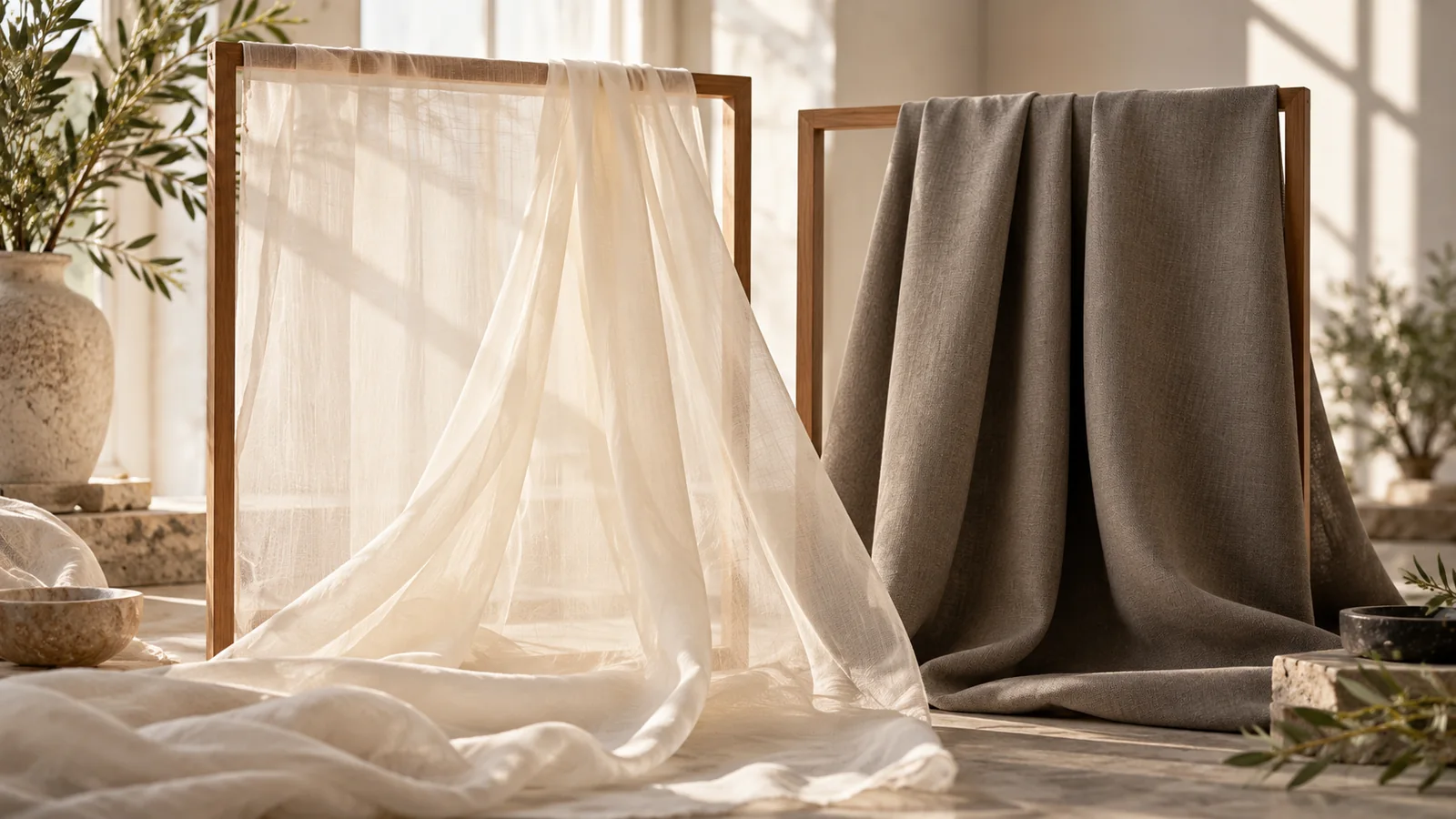
Use the actual colour, planned garment tension and consistent lighting. A swatch held loosely in front of a window is a different condition from a fitted seat area under bright light. Review the garment with the agreed underlayer and explain what coverage means for the intended customer. Obtain consent for any fit photographs and avoid unnecessary intimate images.
Record the lighting direction, whether the fabric was relaxed or extended and which area was reviewed. Use a consistent background or underlayer to compare options. This is an internal visual review, not a substitute for a specified laboratory opacity method where one is required.
Why the colourway matters
A fabric selected in navy does not establish coverage in ivory. Dye, print and surface treatment can change the appearance enough to require another review. Ask for representative swatches in the proposed colours before promising identical performance. If only one colour is ready, approve it explicitly and leave the others pending.
For a printed design, inspect both the lighter ground and darker printed regions. Do not treat a dense pattern as proof of opacity. Consider what happens at a bend, pocket or seam rather than reviewing only a flat central panel.
Compare practical solutions
A lining can improve coverage but adds another layer, seam system and fit relationship. A denser shell may avoid a lining but change weight and drape. A looser silhouette may reduce extension but may not fit the design brief. A different colour can be commercially useful, yet it is not an acceptable silent substitution for an approved palette.
Make these trade-offs visible in the sample request. Ask for a small number of alternatives addressing the same failure, rather than a large uncontrolled collection of swatches. Compare material and garment cost together, including extra cutting, sewing and inspection work.
Set boundaries for the product description
Publish the coverage and comfort wording only after reviewing the selected construction. Avoid medical, cooling or protective claims based on appearance. A conceptual summer image can illustrate mood, not prove breathability. If the available evidence only supports a visual description, use that narrower description.
For sourcing, the immediate next step is a documented material shortlist with specific open questions: coverage in light colours, behaviour at extension, layer count and proposed care. This gives a mill a problem it can answer without promising that one material serves every summer customer.
Approve the assembled garment, not only the swatch
A fabric viewed flat on a desk may not represent its coverage over a curved area, across a seam or against a contrasting underlayer. Review the intended garment in consistent front, side and back lighting, including movement appropriate to the style. Keep the comparison conditions stable enough to distinguish a material change from a lighting change. Record the observation as visual coverage under those conditions, not a universal opacity score.
The assembly can change the outcome. A lining, pocket bag, interfacing or multiple layers may create local differences in appearance or comfort. A pale trouser fabric may show pocket outlines even when the overall garment meets the buyer’s coverage preference. Decide whether that is acceptable for the design rather than assuming that one swatch-level approval answers every question.
If air permeability or moisture behaviour is commercially important, obtain an appropriate technical assessment. Do not infer it from a soft hand, a loose weave visible in a photograph or a supplier’s use of the word “summer.” Ask what was tested and how the result relates to the finished construction.
Compare remedies with their trade-offs
Suppose a hypothetical light-coloured dress is more revealing than the brand intends. The options might include a different material, a lining, altered construction or a more carefully described intended underlayer. None is automatically best. A lining can change drape and assembly cost; a denser fabric can change weight and movement; a colour change may depart from the collection brief.
Review the alternatives against the original priorities. If low weight is essential, adding layers may undermine the reason the material was chosen. If coverage is essential, retaining an unsuitable shell simply because it photographs well is a poor approval basis. Request a revised sample of the chosen solution before treating the issue as closed.
Keep customer-facing language proportionate. “Lined” describes construction; it does not by itself promise cooling or complete opacity in every situation. Similarly, a natural-fibre composition does not establish breathability for every fabric and garment. State verified facts and let the development record support the purchasing decision without turning it into an unsupported performance claim.
Decision checklist
| Concern | Useful review | Not enough on its own |
|---|---|---|
| Air movement | Appropriate method-defined test | Low GSM |
| Moisture comfort | Relevant material and garment assessment | Natural-fibre label |
| Visual coverage | Colour-specific review at intended tension | Dark promotional photograph |
| Lining decision | Whole-garment comparison | Adding a second layer by default |
Frequently asked questions
Are breathable fabrics always transparent?
No. Coverage and comfort depend on different properties and should be assessed separately.
Can black and white share one approval?
Not safely without reviewing the colour-specific behaviour relevant to the garment.
Does a lining always make a dress hotter?
The effect depends on the entire assembly and wearing conditions; compare actual alternatives instead of making a universal claim.
Can I claim cooling from a summer photograph?
No. Performance wording needs appropriate evidence, not a visual impression.
Sources & scope
- AATCC: Standard Test Methods and Procedures
Public method directory only. Obtain licensed methods and laboratory advice before specifying tests. Publication date not stated. Checked 23 October 2026.
Your next step
Compare fabric and coverage options →For your collection, confirm the style’s size chart and specifications. S–8XL is an overall development range, not a US size conversion.
Browse styles · Development services