Key takeaways
- Name the exposure and the acceptance criterion.
- Identify colour, lot and material on every report.
- Treat shade matching and colourfastness as separate approvals.
Map the likely exposures
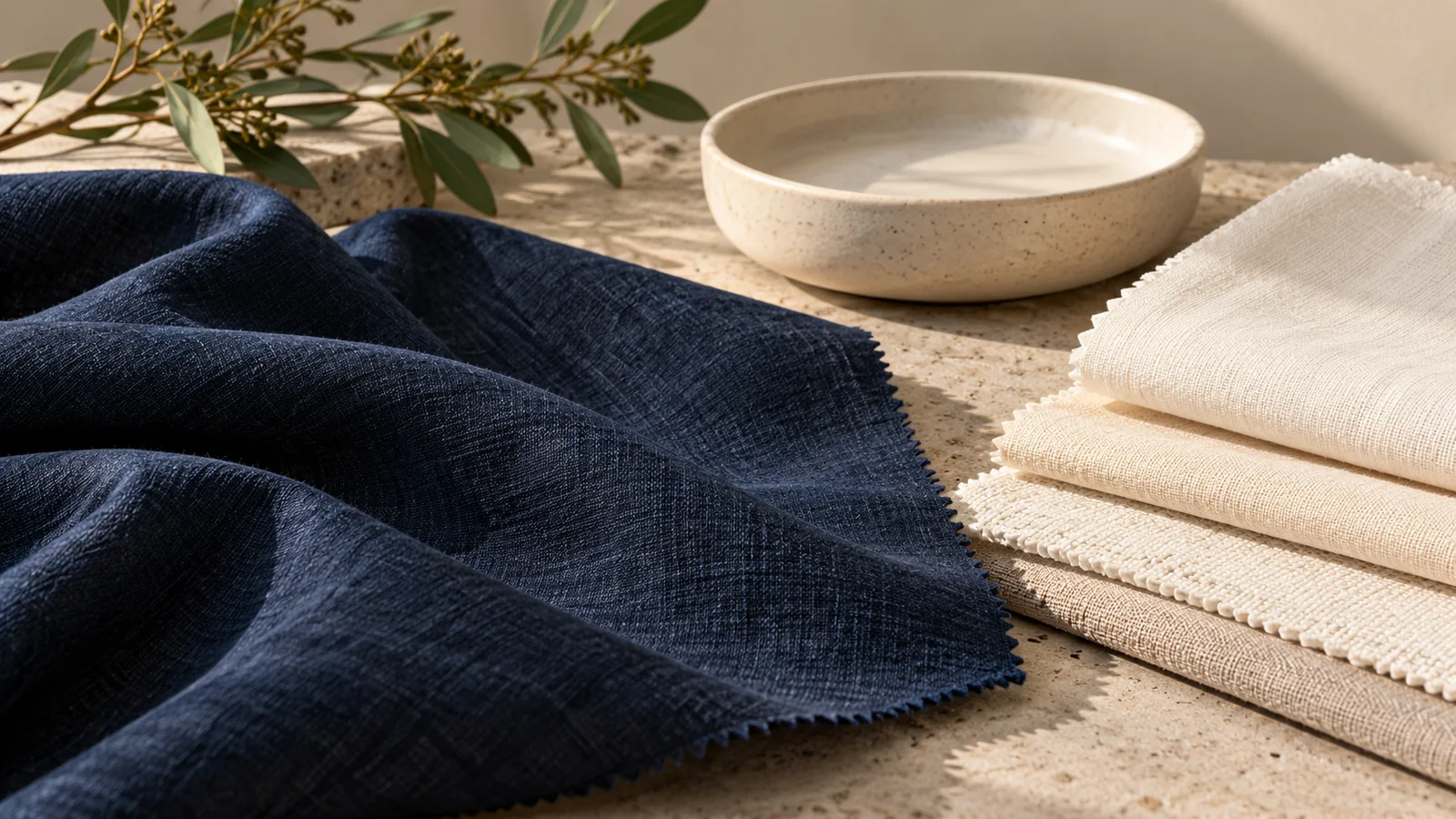
An indigo trouser may contact a light seat or bag; a dark blouse may sit beside a pale lining; a dress may be laundered repeatedly. These examples identify questions, not predetermined failures. Ask the laboratory which assessments fit the intended use and destination requirements.
The AATCC: Standard Test Methods and Procedures directory separates textile test methods. Consult the actual current method with a qualified provider rather than reproducing a procedure from memory. A supplier’s report should identify what was tested, not simply state that quality passed.
Do not confuse matching with durability
A shade can match the approved reference and still behave unexpectedly in use. Conversely, an otherwise stable material can be the wrong shade. Keep the visual colour approval and performance evidence in separate fields so neither silently replaces the other.
Agree lighting and reference conditions for shade review. Phone photographs are useful for communication but are not dependable absolute colour standards. If a buyer approves from a screen because time is short, record that limitation and the remaining physical approval requirement.
Make the evidence traceable
Ask for sample identification, test method and version, test conditions, results and the agreed decision rule. Match the report to the material article, colour and relevant lot. If testing covers only one colour, do not extend the conclusion to the whole palette without a justified plan.
A certificate or report image missing its sample identifier is difficult to use. Request the complete authorized document rather than cropping it to a reassuring pass statement. Do not turn an unrelated laboratory report into product proof.
Review combinations, not isolated materials only
Contrast trims, linings and printed panels introduce contact relationships. A dark binding against a light shell may need attention even if each component looked acceptable alone. Consider the assembled garment and planned care route when deciding what to submit.
If a problem appears, contain the affected material and agree corrective action. Changing care wording after production is not automatically an adequate answer. The buyer should understand whether the issue affects appearance, transfer or a contractual requirement, and who has authority to release the order.
Use cautious commercial language
Do not promise that colour will never fade or transfer. Describe verified performance within its conditions, and ensure consumer-facing instructions are supported. This guide is a procurement framework, not a guarantee for any FORMIVA concept style.
For a mixed-colour order, build the testing and approval time into the plan before approving the palette. A shorter palette with evidence may be a better first launch than many colours whose performance has not been checked. The decision depends on your customers and risk tolerance, not a universal rule against variety.
Map contact risks before ordering tests
List what the garment is likely to touch: skin, light underwear, a lining, a bag strap, upholstery or another garment. Then consider intended care and exposure. This exercise does not determine a test method by itself, but it gives the laboratory a useful brief. A dark trouser style and a light occasion blouse may raise different priorities.
Identify which colourways and material combinations need review. Do not assume that a result from one colour covers a much darker shade or a different finishing process. Where a print, trim or contrast panel is involved, ask whether the assessment should include the assembly rather than only the base fabric. Keep each report tied to the submitted reference.
Agree acceptance criteria with competent technical support before testing. A buyer should not select a passing threshold after seeing the result. Record the method, conditions and decision basis in the approval file, and distinguish a visual shade assessment from a colourfastness assessment. They answer different questions.
Handle an unexpected transfer observation
Suppose a hypothetical dark sample leaves a mark on a light cloth during an informal handling review. Preserve the sample identity and describe exactly what happened. Do not publish a performance conclusion from an improvised test, but do not ignore the observation because the garment looks attractive. Ask for an appropriate investigation with the actual material reference.
If a supplier changes the dyeing or finishing process, verify the revised submission rather than accepting the earlier report as evidence. A new care instruction may also affect the intended-use discussion, but it should not be used casually to shift an unresolved issue to the customer. Obtain destination-specific advice where labeling or claims are involved.
The purchasing record should make the outcome clear: approved, rejected or awaiting further evidence, with the relevant report attached. Avoid vague phrases such as “good colour” that combine shade preference, consistency and transfer resistance into one statement. Clear categories help prevent a visual approval from being mistaken for technical approval.
Decision checklist
| Question | Record | Common confusion |
|---|---|---|
| Does shade match? | Physical reference and viewing condition | Matching is not fastness |
| Does colour transfer? | Relevant test and substrate | A photo cannot measure transfer |
| What happens after care? | Specified method and cycles | One care route does not cover all |
| Which colours are covered? | Article, colour and lot IDs | One report for every colour |
Frequently asked questions
Can I test only the darkest colour?
A risk-based plan may prioritize certain colours, but it needs technical justification; do not assume automatic coverage.
Does a matching lab dip prove fastness?
No. It primarily addresses shade approval under agreed conditions.
Can a care label replace testing?
No. Instructions should be supported by appropriate evidence.
Are home wash checks useless?
They can reveal issues, but must not be misrepresented as accredited or standardized laboratory results.
Sources & scope
- AATCC: Standard Test Methods and Procedures
Public method directory only. Obtain licensed methods and laboratory advice before specifying tests. Publication date not stated. Checked 23 October 2026.
Your next step
Prepare colour and care requirements →For your collection, confirm the style’s size chart and specifications. S–8XL is an overall development range, not a US size conversion.
Browse styles · Development services