Key takeaways
- Define the lot and readiness criteria.
- Agree methods and defect classifications with the inspector.
- Reserve time for corrective action and reinspection.
Give the inspector the right reference
Provide the approved specification, sample reference, colour and size matrix, label artwork and packing requirements. Identify which version governs the inspection. If the buyer and factory have different references, resolve that discrepancy before the visit.
State what the inspection covers and excludes. Visual workmanship, dimensions, packing and laboratory performance are not interchangeable. An inspector’s garment measurement does not automatically establish fabric composition or chemical compliance.
Understand the role of sampling
ISO 2859-1:2026: acceptance sampling by attributes describes an acceptance-sampling framework. The public scope is not a substitute for the licensed standard or a qualified inspection plan. Agree the relevant edition, inspection level, lot definition and decision rules with the provider; this article does not prescribe universal AQL values.
Sampling does not mean every piece has been inspected or that the accepted lot contains no defects. Explain that distinction internally before promising a retailer “100% checked” on the basis of a sample inspection.
Make readiness measurable
Ask what proportion of the order must be finished and packed for the agreed inspection type. Confirm access to all relevant sizes, colours and cartons. Do not let the factory select only convenient or attractive pieces unless the inspection plan explicitly calls for a different procedure.
Define what happens if the order is incomplete: postpone, inspect a clearly defined partial lot or record the limitation. A rushed visit with missing combinations can create a report that looks reassuring but answers the wrong question.
Plan the response to findings
Agree who receives the report, who approves corrective action and who decides on release. Classify findings according to the agreed criteria, not the urgency of the shipment. Keep photographs tied to item and carton identifiers where needed.
If rework is required, ask how the corrected goods will be identified and whether reinspection is necessary. Do not assume that a promised repair proves completion. Build enough time into the delivery plan to verify the action.
Keep commercial pressure separate from evidence
A missed vessel or retail deadline does not change the observed condition of the goods. A buyer may choose a commercial concession, but it should be documented as a decision, not rewritten as a clean inspection result.
FORMIVA accepts third-party inspection by arrangement. Ask about access and timing during order planning, not only when production is nearly complete. The useful outcome is a shared inspection brief and an agreed release process, rather than a vague request to “check quality.”
Write the inspection brief before choosing a date
Give the inspection provider the purchase order, approved allocation, product specifications and relevant sample references. Include the points that matter to the style, such as garment measurements, labels, construction details and packing. A provider cannot reliably check requirements that remain in private messages between the buyer and supplier.
Ask how the inspection will be conducted and what must be ready. Clarify the intended inspection stage, access to goods, sampling approach and reporting format. If the order is not sufficiently prepared, the visit may produce limited evidence. Confirm readiness rather than treating a booked appointment as proof that the shipment can be released.
Separate the inspection decision from any laboratory testing. An inspection report may document observed workmanship and measurements without establishing fibre composition or other material properties. Identify what requires separate evidence so a clean-looking report is not mistaken for complete product compliance.
Plan what happens after a finding
In a hypothetical inspection, a measurement discrepancy is found in the sampled garments. The buyer needs a response process, not only a pass/fail label. Ask the supplier to investigate the affected scope and propose corrective action. The evidence needed to close the issue depends on what was found and how it is corrected.
If goods are reworked, determine whether a follow-up inspection or another verification is needed. Do not assume that a photograph of one corrected piece establishes the status of the whole order. Keep the original report, response and closure evidence connected so the release decision can be understood later.
Agree who has authority to accept a deviation. An inspector’s observation and a buyer’s commercial concession are different records. If the buyer accepts a specific issue, document its scope rather than rewriting the report to make it disappear. Clear reporting protects both parties from ambiguity during receiving and any later replenishment discussion.
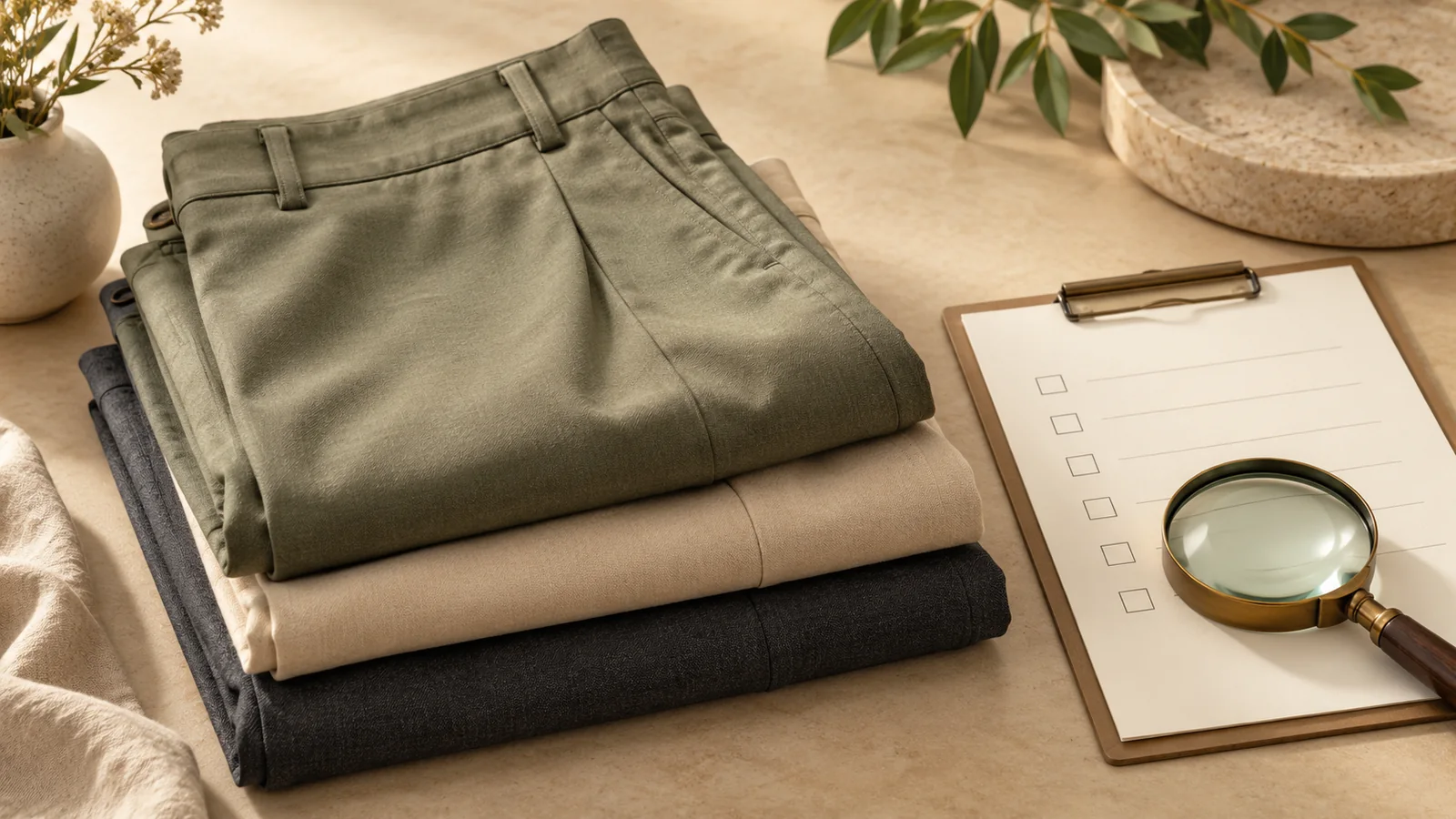
Decision checklist
| Before booking | At inspection | After findings |
|---|---|---|
| Lot and scope | Confirm readiness | Classify against agreed criteria |
| Approved references | Trace samples and cartons | Assign corrective action |
| Sampling plan | Document limitations | Verify rework |
| Time allowance | Keep evidence intact | Record release decision |
Frequently asked questions
Does AQL mean a guaranteed defect percentage?
No. It belongs to a defined sampling and acceptance framework, not a promise about every piece.
Can inspection replace a fabric test?
Not unless the relevant testing is actually included and appropriately performed.
What if goods are only partly packed?
Use the readiness rules agreed with the provider; document any restricted scope.
Who should release a failed lot?
The buyer’s designated authority should make a documented decision after reviewing findings and corrective evidence.
Sources & scope
- ISO 2859-1:2026: acceptance sampling by attributes
Public scope reviewed; no sampling tables reproduced or universal AQL prescribed. Source date: 2026. Checked 23 October 2026.
Your next step
Prepare inspection requirements →For your collection, confirm the style’s size chart and specifications. S–8XL is an overall development range, not a US size conversion.
Browse styles · Development services