Key takeaways
- Define whether the unit is a piece, pair or set.
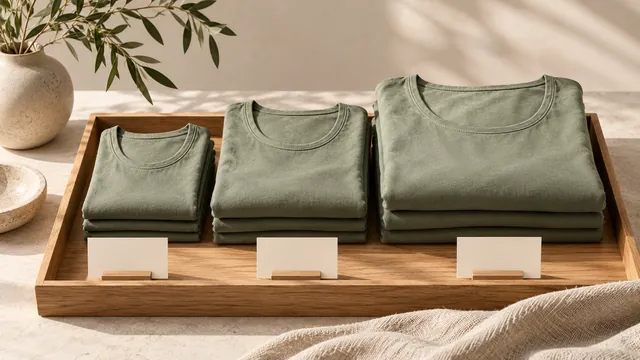
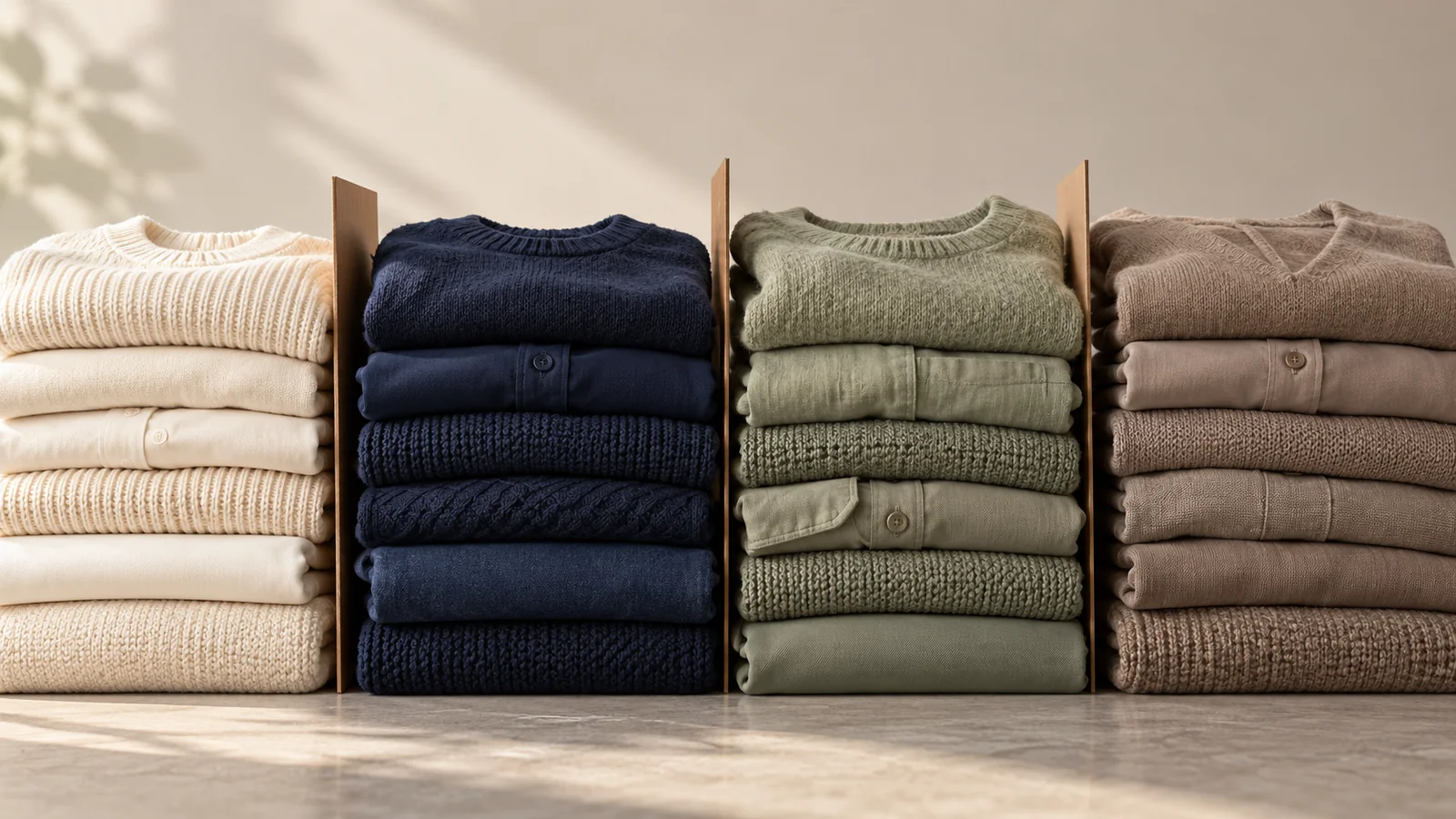
- Keep colour and size quantities visible in one matrix.
- Agree substitutions and shortfalls before production.
Begin with a count that everyone understands
List each style, colour and size as an identifiable line or matrix cell. Check that the subtotals add up to the order total. If a coordinated set includes two garments, confirm whether the quotation counts sets or individual pieces. Never assume that the same word means the same thing to buying, production and packing teams.
FORMIVA lists a catalogue MOQ of 100+ pcs and custom OEM/ODM MOQ of 150+ pcs and supports mixed colours and sizes by agreement. It does not establish an automatic per-colour allowance or a universal minimum for custom-dyed materials. Those are questions for the actual quotation.
Separate garment minimums from material constraints
A garment factory may be able to sew a small quantity while a selected material or trim has a different purchasing minimum. Ask which part creates the constraint: fabric dyeing, print setup, custom labels, packaging or sewing. This helps identify a useful alternative rather than arguing over a single number.
Possible alternatives include an existing material colour, fewer initial colourways or a standard packaging component. Each changes the brief and needs buyer approval. Do not let a supplier quietly replace the agreed fabric simply to satisfy an earlier price.
An illustrative matrix review
Consider a hypothetical order of two styles, each in two colours and three sizes. That creates twelve distinct combinations. Before discussing totals, check whether each combination serves an actual buying purpose and whether the quantities are deep enough for the chosen channel. This example is not a recommended assortment or an approved FORMIVA order.
Use separate fields for proposed quantity, confirmed quantity and packed quantity. Replacing the proposal with the final number loses the audit trail. A discrepancy should be visible rather than hidden in an updated spreadsheet.
Agree what happens when reality changes
Specify how shortfalls, overages or unavailable sizes are handled. The safest default is not a silent colour or size substitution. Identify who can authorize a change and whether it affects price, delivery or the total minimum.
Ask how cartons will be labelled and whether they contain mixed or single combinations. A perfect garment allocation can still become an expensive receiving problem if the packing list does not match the buyer’s warehouse workflow.
Confirm the complete commercial picture
Review material choices, sample approvals, inspection, packing and freight alongside quantity. A lower unit figure can be misleading if it excludes requirements that another quotation includes. Keep unconfirmed timing separate from promises to your retailers.
No external market statistic is required to establish these order fields. The guidance is a proposed buying control based on the site’s confirmed commercial scope, not a claim about universal supplier practice. Send the matrix with your enquiry so the answer can refer to specific combinations.
Define the counting unit before discussing flexibility
Ask whether the quotation counts individual garments, matched sets or another selling unit. A two-piece set can create confusion if the buyer counts pieces and the supplier counts sets. State the unit explicitly on the style matrix and purchase order. Do the same for cartons, packs and any pre-arranged size bundles.
Separate the total minimum from any material or colour constraints. A supplier may be able to assemble a total order in several sizes while facing a separate minimum for a particular fabric or dye colour. The phrase “mixed sizes available” does not answer whether every proposed colour–size combination is acceptable. Request written confirmation of the actual matrix.
For this website, 100+ pcs is the catalogue MOQ and 150+ pcs is the custom OEM/ODM MOQ. The basis and conditions still need confirmation for the requested style, colour mix and customization. Do not interpret it as a promise that each combination can be ordered freely. A useful enquiry includes the proposed quantities so the supplier can respond to a concrete plan.
Reconcile quantities at approval and packing
In a hypothetical order with several colours and sizes, an overall total can remain correct while the allocation is wrong. Compare row totals, column totals and the grand total when approving the order. Give each colour a controlled reference, not only a descriptive name such as “green,” which may be interpreted differently across messages.
If a material issue requires changing one colour, revise the matrix and obtain approval before redistributing quantities. Do not allow a verbal substitution to leave the original purchase document unchanged. Record whether the change affects price, delivery, labels or packing requirements.
At packing, the carton information should be reconcilable to the approved matrix. Buyers who need mixed cartons or channel-specific packs should state that early, because repacking may add work. The final check is not merely whether the shipment contains the right number of pieces; it is whether those pieces match the approved combinations and can be received correctly by the buyer’s operation.
Decision checklist
| Field | Agree explicitly | Avoid |
|---|---|---|
| Counting unit | Piece or set | Ambiguous totals |
| Colour minimum | Material and garment basis | Assuming MOQ covers every dye lot |
| Size mix | Confirmed quantities | Copying a generic ratio |
| Packing | Carton breakdown and labels | Unapproved substitutions |
Frequently asked questions
Does 100 pcs mean 100 per colour?
The current website does not confirm that basis. Ask for the written conditions of the selected order.
Can custom labels have their own minimum?
They may; request component-specific terms instead of assuming they match garment quantities.
Can I mix top and bottom sizes in a set?
Discuss it explicitly, including counting, pricing and packing.
Should a supplier substitute a missing colour?
Only under a change process you have agreed; a similar shade is not automatically equivalent.
Sources & scope
This article is an editorial procurement framework, not a market survey or a claimed test result. Confirm order-specific requirements with your supplier.
How we review and correct articlesYour next step
Submit a mixed-order matrix →For your collection, confirm the style’s size chart and specifications. S–8XL is an overall development range, not a US size conversion.
Browse styles · Development services