Key takeaways
- Separate demand assumptions from available stock.
- Measure availability when interpreting sales.
- Use a review date and replenishment trigger before launch.
Define the unit of the forecast
A size ratio belongs to a product, market and channel. A trouser sold online to an established audience is not interchangeable with a blouse offered through several boutiques. Record the exact style, body chart and price position before borrowing a ratio from another collection.
Do not map letter sizes to fixed US numbers without a verified chart. S–8XL is FORMIVA’s overall development scope, not a statement about the size mix available for every SKU. Ask which sizes can actually be supplied before translating a plan into an order.
Use evidence in order of relevance
Your own comparable sell-through and fit-return records are usually more actionable than a broad social trend. If those records do not exist, use customer requests, retailer commitments or a small controlled launch, while noting their limitations. A waiting list expresses interest, not guaranteed purchase.
A public Reddit: plus-size capsule wardrobe question discussion illustrates why top and bottom needs can differ within one customer’s wardrobe. It is one anecdote, not a distribution of demand. Use such questions to improve what you ask customers, not to calculate percentages.
A hypothetical allocation exercise
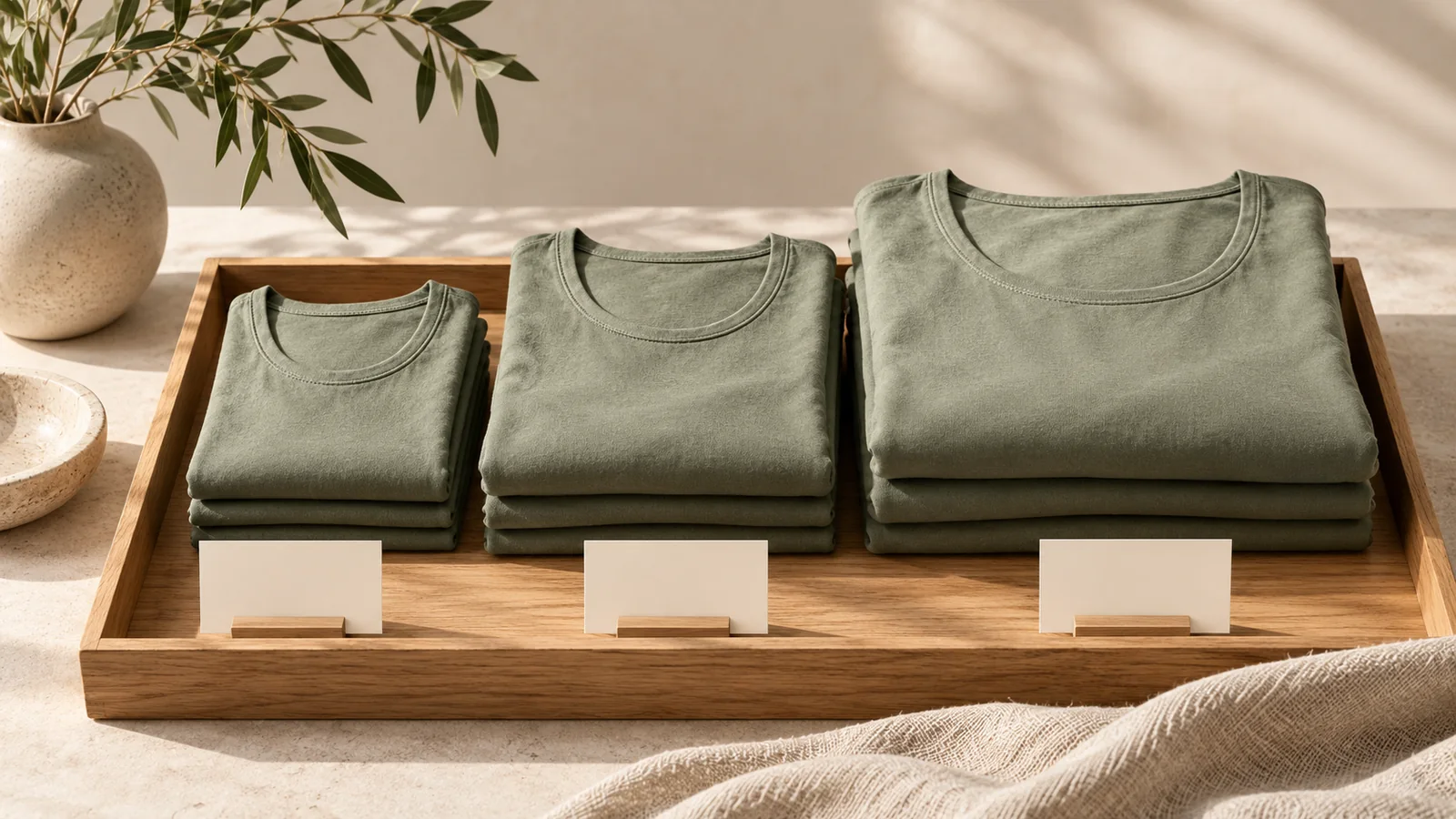
Suppose a buyer can fund 120 pieces across six approved sizes. An equal allocation gives 20 per size. That is arithmetic, not a recommendation. Compare it with a second plan informed by actual commitments, and identify which sizes have the weakest evidence. Do not increase the total simply to make every cell look generous.
Consider colour at the same time. Six sizes across four colours create 24 combinations; a small order can become very shallow even when the overall quantity seems adequate. Record where a missing combination would undermine the promised assortment.
Interpret early sales carefully
A size that sold out early may have unmet demand. A size with low sales may have had poor availability, weak presentation or a fit problem. Track days available, cancellations, returns and requests alongside units sold. Do not rank size demand using raw sales alone when exposure differs.
Set a review window appropriate to your channel. Avoid changing the entire ratio after one unusually strong day. Separate new customer acquisition from repeat buying where possible, because those groups may not behave identically.
Agree the recovery path
Ask the supplier about repeat availability, fabric continuity and the minimum conditions for replenishment. FORMIVA’s confirmed catalogue MOQ is 100+ pcs; custom OEM/ODM MOQ is 150+ pcs; the basis for style, colour and size combinations must be agreed rather than assumed. A replenishment plan is only useful if the proposed repeat is commercially feasible.
Write the next decision in advance: what evidence would justify more of a size, a reduced colour range or another fit review? This keeps the opening buy a learning exercise rather than a permanent claim about all plus-size customers.
Separate available evidence from allocation assumptions
Start a planning sheet with distinct columns for evidence and assumptions. Evidence might include your own style-level sales, returns and availability history. Assumptions might include the expected customer mix for a new channel or how a new silhouette may differ from an established one. Labeling these separately prevents a provisional guess from becoming a supposedly proven ratio in later discussions.
Check whether earlier sales were constrained by stock. A size that sold few units because it was unavailable should not automatically receive a smaller allocation. Likewise, a high return rate needs interpretation: the reason may concern fit, quality, description or customer behaviour. Do not reduce complex feedback to one number without examining the context.
Where history is genuinely absent, use a limited opening commitment that fits the supplier’s confirmed conditions and your risk tolerance. Decide what information you will collect and when you will review it. A small order is not automatically a good experiment if it contains too many colour–size combinations to produce interpretable feedback.
Use a scenario rather than a pretend forecast
Consider a hypothetical buyer with an approved total quantity but no reliable size history. Instead of presenting one ratio as certain, compare a balanced allocation with alternatives that place more units toward different parts of the range. Calculate how each would affect availability and potential leftover stock under several possible demand patterns. These are planning scenarios, not market predictions.
Ask whether replenishment is feasible before relying on it as a safety net. Material availability, production scheduling and minimum conditions may limit how quickly a missing size can be replaced. Confirm the process rather than assuming that a small initial order can always be topped up immediately.
After launch, record availability alongside sales. Review at a predefined point, but avoid reacting to a handful of early orders as though they establish a stable preference. The next allocation should document what changed and why. This creates a learning process that can improve over time without claiming that the first ratio was scientifically validated.
Decision checklist
| Signal | Useful for | Limitation |
|---|---|---|
| Comparable order history | Starting allocation | May involve a different fit |
| Retailer commitments | Channel-specific quantity | May change before delivery |
| Wait-list requests | Questions and interest | Not completed sales |
| Early sell-through | Revision of the hypothesis | Distorted by stockouts |
Frequently asked questions
Should I order equal quantities in every size?
Only if that is a conscious starting hypothesis; it is not a market fact.
Can I use a competitor’s size availability?
It shows their displayed assortment, not their sales or unmet demand.
Should tops and bottoms share one ratio?
Not automatically. Fit and purchase behaviour can differ by category.
What is the most important early metric?
There is no single sufficient metric; combine sales with availability and fit-related feedback.
Sources & scope
- Reddit: plus-size capsule wardrobe question
One self-selected discussion used to discover a question, not prevalence, sales or representative demand. Source date: 2026-01-18. Checked 23 October 2026.
Your next step
Discuss your proposed size breakdown →For your collection, confirm the style’s size chart and specifications. S–8XL is an overall development range, not a US size conversion.
Browse styles · Development services