Key takeaways
- Do not confuse a brand label with a compliance label.
- Approve artwork and a physical placement reference.
- Confirm destination-specific requirements before launch.
Separate three information layers
The brand label communicates identity. Product-information labels communicate facts and care-related information as required for the destination. Packing marks help identify and move goods. One attractive hangtag does not necessarily fulfil all three purposes.
The FTC: Threading Your Way Through Textile and Wool Labeling Requirements guide explains important US textile-labeling requirements. It is not a complete EU or global compliance checklist. Have the appropriate responsible party verify current destination rules and the actual garment information before production.
Specify the physical details
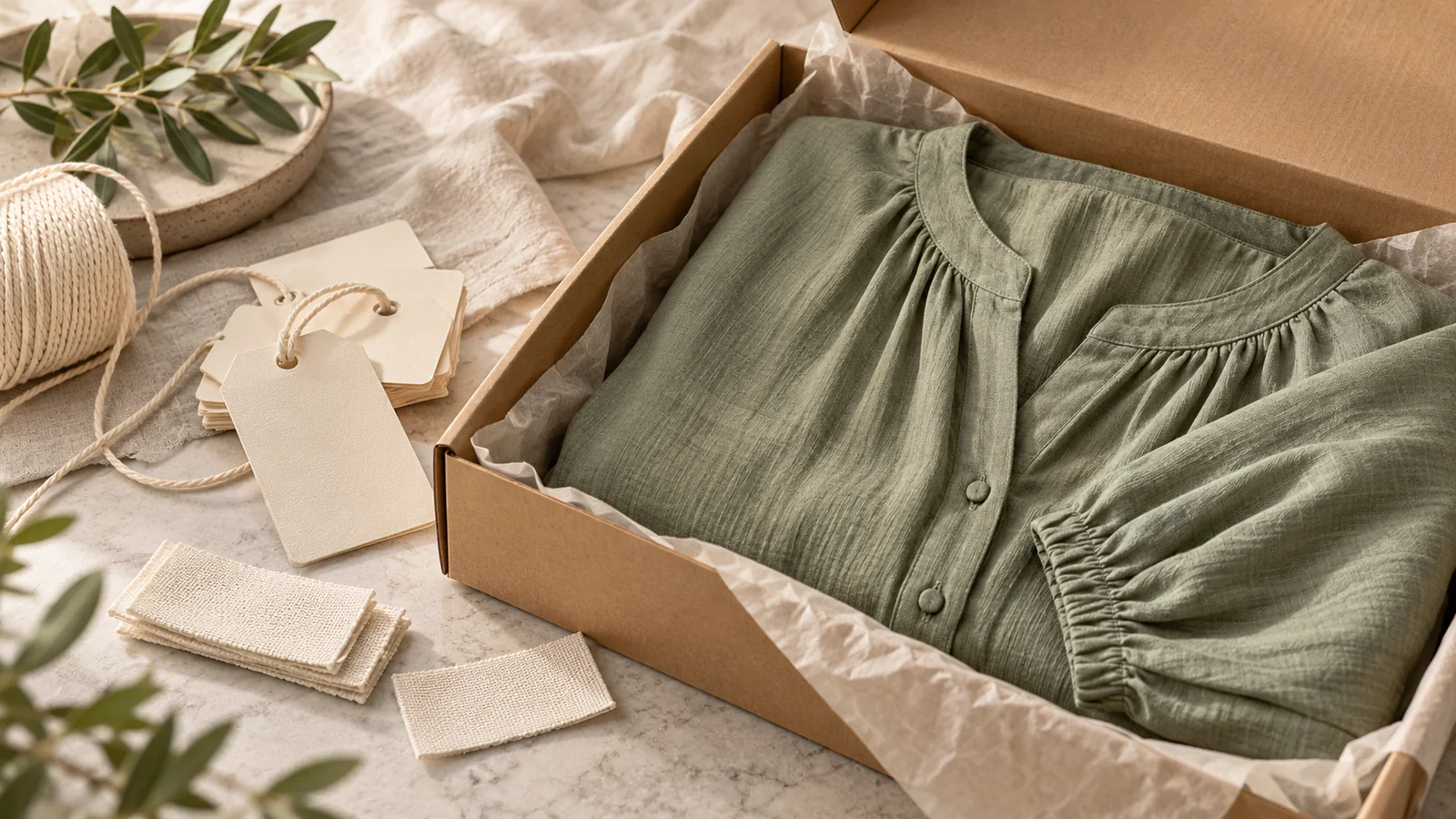
Provide artwork files, dimensions, colours, material preference, placement and attachment method. Ask for a sample if texture or contact comfort matters. A label that looks good at enlarged screen size may be difficult to read or uncomfortable in the garment.
Review the relationship to seams and openings. A placement instruction should be unambiguous enough that different operators and inspectors can identify the intended position. Do not rely on “usual location” when the style is new.
Keep factual fields tied to evidence
Composition must come from the actual material information, not a generated image or a guessed fabric name. A size label must correspond to the approved chart, not a universal conversion from S–8XL. Origin and responsible-party information require correct business records.
If data is missing, leave the artwork unapproved rather than inserting a plausible value. A temporary placeholder inside a development file must not accidentally become a production label.
Plan packaging around the channel
Discuss folding, protective components, individual identification, carton breakdown and any retailer-specific requirements. Avoid adding packaging merely to suggest luxury. Ask what each component does and whether it creates unnecessary cost or handling.
A small brand shipping direct to consumers may have different needs from a wholesaler delivering mixed cartons to retail stores. Confirm the packing unit and identifiers before approving the final layout.
Approve one controlled reference
The release record should link the garment version, artwork version and packing instruction. Agree how later changes will be approved and whether new components introduce minimums or timing constraints. FORMIVA supports label and packaging customization by agreement, not an unlimited menu at a fixed price.
The next useful action is to assemble a brief with known facts and clearly marked questions. This lets development, compliance and production responsibilities stay visible instead of being compressed into a request to “add our logo.”
Separate brand expression from technical instructions
A mood board can communicate a direction, but it cannot replace the information needed to make a garment. Pair it with the intended category, silhouette, material reference, target body chart and relevant construction details. Identify which elements are fixed and which are open to the supplier’s proposal. This allows useful development input without inviting unintended design changes.
For branding, provide controlled artwork and placement instructions. State dimensions and application method where confirmed, and request advice where they are not. A logo file alone does not establish the label’s material, colour, attachment or position. Keep care and composition information separate from decorative branding because they have different verification requirements.
For packaging, explain the receiving or sales-channel need. A request for “premium packaging” is too vague to quote consistently. Specify the components, quantities and any required format, while leaving unconfirmed compliance requirements for appropriate review. Do not ask the supplier to invent claims or certification marks to make the pack look more complete.
Resolve an incomplete brief through a question log
Consider a hypothetical buyer who has a reference silhouette but has not chosen the fabric. The next useful step is not to assume a material based on the image. List the desired appearance and wearing conditions, then request suitable options with their known specifications. A sample made before material selection may help discuss shape, but its limitations should be explicit.
Maintain a question log with the issue, responsible person and decision needed. Group questions that affect cost or pattern development so they are answered before downstream work depends on them. This avoids repeated changes caused by small unresolved details scattered across messages.
When the brief is ready for quotation, confirm that the quantity unit, proposed colour–size allocation and delivery requirement are clear. A quotation based on incomplete assumptions may need revision. The goal is not an elaborate document for its own sake; it is a concise set of decisions that allows both parties to discuss the same product.
Decision checklist
| Layer | Buyer input | Approval evidence |
|---|---|---|
| Branding | Artwork, size, placement | Physical or appropriate digital reference |
| Product facts | Verified material and destination information | Checked final text |
| Packing | Channel, unit and carton rules | Packing sample or specification |
| Release | Versions and owner | Written approval record |
Frequently asked questions
Can my logo label replace every other label?
Not automatically. Required information depends on destination and product; obtain an appropriate review.
Can I use the same size label for all suppliers?
Only when it maps to your approved product-specific system; letter labels are not universal measurements.
Should packaging be finalized after production?
Finalize the requirements early enough to obtain components and verify packing.
Are custom labels included in the garment MOQ?
Confirm component-specific minimums and costs in the quotation.
Sources & scope
- FTC: Threading Your Way Through Textile and Wool Labeling Requirements
US regulatory background only, not a complete US/EU compliance opinion. Verify destination rules before launch. Publication date not stated. Checked 23 October 2026.
Your next step
Prepare a private-label brief →For your collection, confirm the style’s size chart and specifications. S–8XL is an overall development range, not a US size conversion.
Browse styles · Development services