Key takeaways
- Identify the problem before adding a layer.
- Evaluate the shell and lining as an assembly.
- Include care, movement and cost in the decision.
Define the reason for the layer
A lining may address visual coverage, interior finish or interaction with underlayers. Write that purpose down. If the only reason is “premium garments have linings,” there is not yet a technical brief.
Review the actual shell in the proposed colour and silhouette. A coverage issue in a light colour may not apply identically to a dark colour, but that does not justify changing the specification without approval. Keep the customer-facing description accurate for each option.
Check movement at both layers
A generous outer garment can still restrict if the lining is too close or attached in a way that limits movement. Review the whole garment while sitting, reaching or walking as appropriate. Record where the limitation appears rather than blaming the wearer’s proportions.
For a stretch shell, ask how the lining and seams accommodate the intended movement. Do not assume that matching fibre composition creates matching behaviour. The Coats: Soft and Secure Seams reference supports considering seam requirements, not a particular lining recommendation.
Compare construction and care
Look at attachment points, hem relationships, openings and areas where layers accumulate. A lined waistband or sleeve can change bulk and handle. Ask the development team to demonstrate the relevant assembly rather than showing two loose swatches.
Review care compatibility and any differential dimensional change. A lining that hangs below the shell after care may require an assembly or material correction. Do not hide the issue by approving only the garment’s exterior photograph.
Consider alternatives before deciding
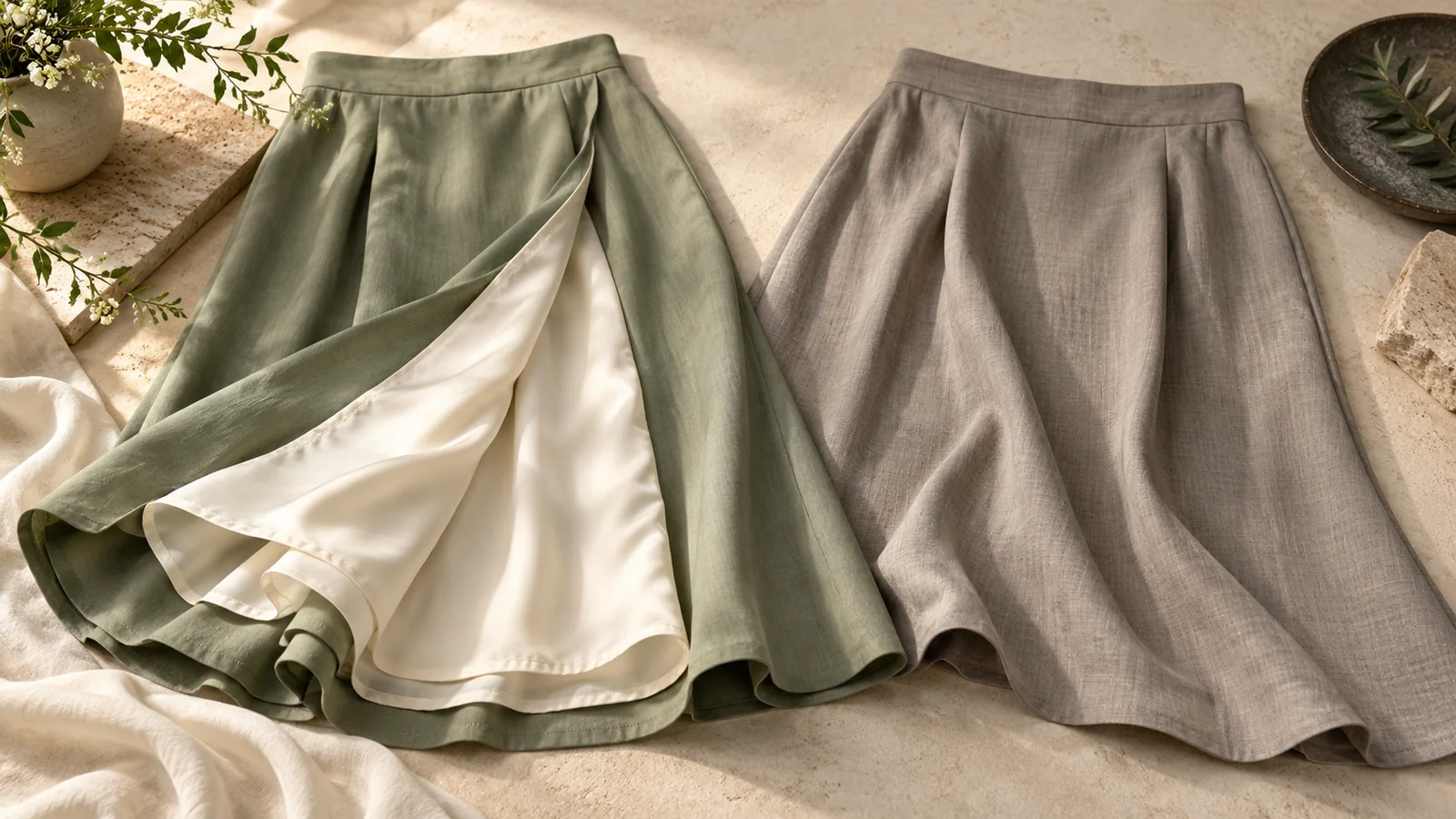
A different shell, a partial lining, a revised silhouette or a separate underlayer may address the original problem. Each has commercial and communication consequences. A separate slip, for example, changes what is included and how the garment is sold. It is not a silent equivalent to a fully lined dress.
Compare cost across material, cutting, sewing and quality checks. Do not assume a heavier shell is cheaper than a lining or vice versa. Ask for comparable quotations using the same agreed brief.
Record the final boundary
The approval should identify the extent of the lining, material, attachment and relevant fit review. If one colour or size has not been checked, state the limitation. Avoid universal claims such as completely opaque in every condition.
A practical buyer outcome is a short decision note explaining why the selected assembly is suitable, what it costs and what evidence remains pending. This is more useful than adding a lining to every style in a collection.
Include the lining in the fit and cost discussion
A lining is part of the garment system, not simply an extra layer added at the end. Ask how it attaches, where it needs room and how it behaves relative to the shell. A lining that looks smooth on a hanger may still restrict movement or show at an opening. Review the assembly in the intended wearing conditions.
Include material, cutting, attachment and finishing in the quotation comparison. An unlined version may require a different internal finish to meet the buyer’s expectations. Conversely, adding a lining may change the garment’s weight or care considerations. Neither route is automatically cheaper or more suitable when all required work is included.
Confirm which claims can actually be supported. Lining can address a specific construction or appearance requirement, but its presence does not establish thermal comfort, complete opacity or superior quality in every garment. Describe the verified construction and assess the intended outcome separately.
Review a partial solution before defaulting to a full lining
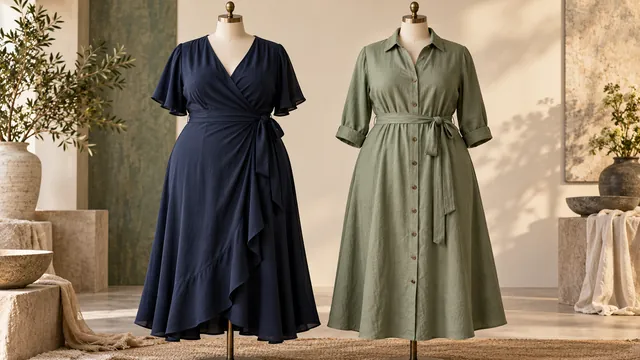
For a hypothetical dress, the buyer may be concerned about one visible area rather than the entire garment. Ask the developer whether a localized construction solution is appropriate and what limitations it introduces. A partial lining can create its own transition lines or movement issues, so it still needs a physical review.
Compare the alternatives using the same shell material and similar conditions where possible. Record coverage, movement, visible edges and behaviour after care. If several elements change between samples, note that the comparison does not isolate the lining choice.
The final approval should identify the lining material and construction, not just say “lined.” If the supplier later proposes a substitute, review the relationship again. A lining selected for one shell may not be appropriate after the outer material changes. Keep both references connected in the production specification.
Decision checklist
| Option | Potential benefit | Question before approval |
|---|---|---|
| Unlined | Fewer layers and operations | Does shell meet coverage and finish needs? |
| Partial lining | Targeted coverage | Are transitions comfortable and stable? |
| Full lining | Consistent interior assembly | Does it preserve movement and care compatibility? |
| Separate underlayer | Flexible styling | Is inclusion and sizing clearly communicated? |
Frequently asked questions
Is a lining always more premium?
No. Suitability, execution and the intended use matter more than layer count.
Can I use any soft lining?
Check movement, care and construction compatibility with the shell.
Should the lining be photographed separately?
An interior view can clarify construction, but physical assessment is still important.
Can I remove a lining to reduce price?
Only after rechecking coverage, finish and fit, and approving the revised specification.
Sources & scope
- Coats: Soft and Secure Seams
Seam design considerations; no product certification inferred. Publication date not stated. Checked 23 October 2026.
Your next step
Review a dress construction option →For your collection, confirm the style’s size chart and specifications. S–8XL is an overall development range, not a US size conversion.
Browse styles · Development services