Key takeaways
- Test getting into the garment as well as wearing it.
- Review seated pressure and recovery.
- Do not use elasticity to compensate for an unresolved pattern.
Elastic is a system, not just a component
An elastic waistband involves the elastic article, channel or attachment, garment opening and intended extension. Ask how the assembly behaves during entry and repeated wear. A very extensible opening may still feel uncomfortable once seated, or fail to recover adequately for the intended use.
Define relaxed and extended measurements separately, with a method. Do not compare a stretched circumference with a relaxed body measurement without explaining the relationship. Performance must come from the selected material and assembly.
Fixed waistbands need a clear fit reference
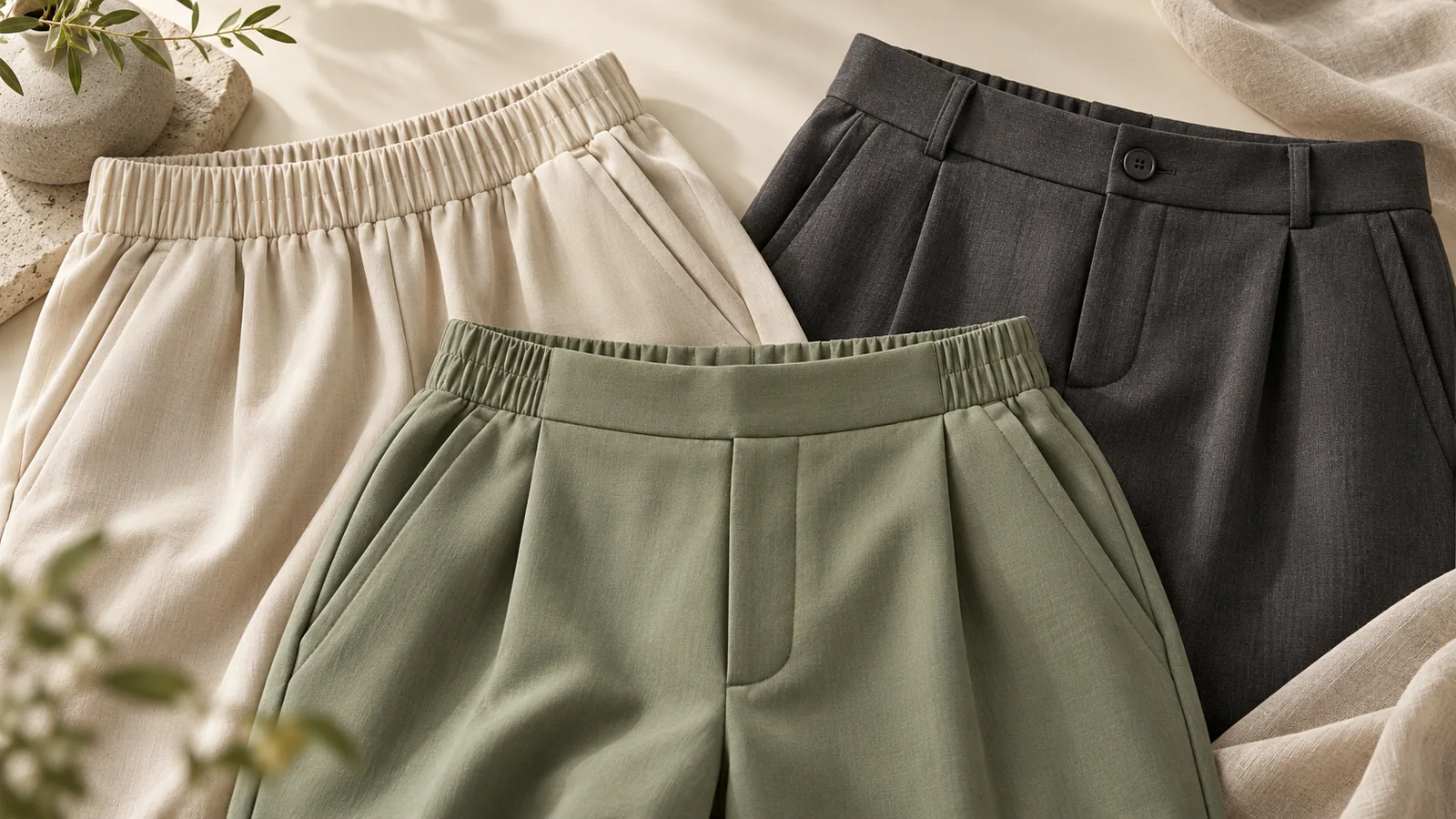
A fixed waistband can support a structured silhouette but offers less accommodation unless its design or material provides it. Review closure position, waist shape and the relationship to the seat and rise. A correct waist measurement does not prove the whole trouser fits.
Include entry and seated assessment. A closure that can be fastened while standing may still create pressure in use. Ask for observations in the agreed wearing conditions instead of judging only a front photograph.
Hybrid designs combine decisions
A flat front with an elasticated back, for example, may offer a particular visual and functional compromise. It also introduces transitions between sections. Review where the elastic ends, how gathering is distributed and whether the assembly remains balanced.
Do not assume that adding a small elastic section preserves the fit of an existing fixed-waist pattern. The development team should evaluate the revised relationship and provide a controlled sample.
Compare with a practical test brief
Use the same intended body reference and underlayer where possible. Assess entry, standing appearance, sitting, walking and return to the starting position. Record pressure, rolling, slipping or unwanted gathering as observations, not diagnoses.
A hypothetical decision may favour a hybrid for a particular workwear brief because it meets the desired front appearance and movement. That is a project-specific conclusion, not evidence that hybrid waistbands outperform others.
Approve continuity as well as the first sample
Specify the elastic or waistband components and record substitution rules. A visually similar elastic may not behave the same way. The The LYCRA Company: Quality FAQ reference is useful background on why stretch terminology needs care; it does not certify any component used here.
Request the actual trouser sample and size-specific specification before ordering. FORMIVA’s development concepts do not imply confirmed waistband performance, pressure values or universal fit.
Evaluate the waistband as an assembly
Compare the waistband, fastening, interfacing and garment body together. The width of an elastic component or the appearance of a flat front does not independently establish comfort. Ask how the assembly is intended to sit and what adjustment, if any, the wearer can make. Check that the design brief and the sample are describing the same wearing position.
During review, include sitting and normal movement appropriate to the style. Record pressure, rolling, shifting or gaps without assuming that all participants will have the same experience. Different waist–hip relationships can expose different limitations. A supplier’s label such as “comfort waist” should not replace a documented fitting discussion.
For purchasing, compare the construction requirements and available component evidence. Elastic behaviour and attachment need appropriate verification; a photograph of a stretched waistband is not a recovery test. Keep the approved material and assembly references so production does not substitute a visually similar component without review.
A trouser waistband decision under competing priorities
Suppose a hypothetical brand wants a clean front appearance and flexibility across the waist. A partially elasticated option may be worth developing, but it is not automatically the answer. Review how the front and back distribute fullness, whether the garment can be put on easily and how the waist sits relative to the seat and rise.
Compare that route with an adjustable or more structured alternative using the intended customer brief. The best choice may depend on styling, closure preference and the required silhouette. Avoid promising that one construction accommodates every body shape within a size label.
Document the accepted appearance at rest and during movement. A waistband that performs as intended can still be rejected later if the team has not agreed whether visible gathering is part of the design. Clear approval photographs and technical notes help distinguish intentional construction from a production discrepancy.
Decision checklist
| Type | Useful direction | Review carefully |
|---|---|---|
| Elastic | Pull-on and flexible fit briefs | Entry, pressure, rolling and growth |
| Fixed | Defined structured waist | Closure, shaping and seated comfort |
| Hybrid | Selected balance of appearance and accommodation | Transitions and gathering distribution |
Frequently asked questions
Does elastic solve every waist-to-hip difference?
No. The pattern and entry opening still need development.
Should relaxed and stretched waist values share one field?
No. Label both states and their measuring methods.
Can I change the elastic after sample approval?
Treat it as a component change requiring appropriate review.
Is a wider waistband always more comfortable?
Not universally; assess the actual assembly and wearing conditions.
Sources & scope
- The LYCRA Company: Quality FAQ
Terminology and branded-fibre distinction; no claim our fabrics contain branded fibre. Publication date not stated. Checked 23 October 2026.
Your next step
Discuss a trouser sample →For your collection, confirm the style’s size chart and specifications. S–8XL is an overall development range, not a US size conversion.
Browse styles · Development services