Key takeaways
- Separate visual illustration from evidence.
- Verify scope and identity before relying on a document.
- Ask for proof relevant to your order, not an unrelated showcase.
Start with the business relationship
Confirm the contracting identity, contact, production location and responsibility for the proposed work. A brand name or website address is not necessarily the legal entity on the order. Resolve discrepancies before sending sensitive artwork or committing funds.
FORMIVA is the current working brand for this preview. The site identifies an own-factory operation in Xiamen, but unconfirmed legal identity, capacity and certifications should not be filled with plausible numbers. Ask for the relevant business records through the appropriate purchasing process.
Match manufacturing evidence to the product
A workshop photograph can show a scene; it cannot by itself establish ownership, current capacity or expertise in your specific construction. Ask how the proposed style will move through development and production, and what evidence can be provided at each decision.
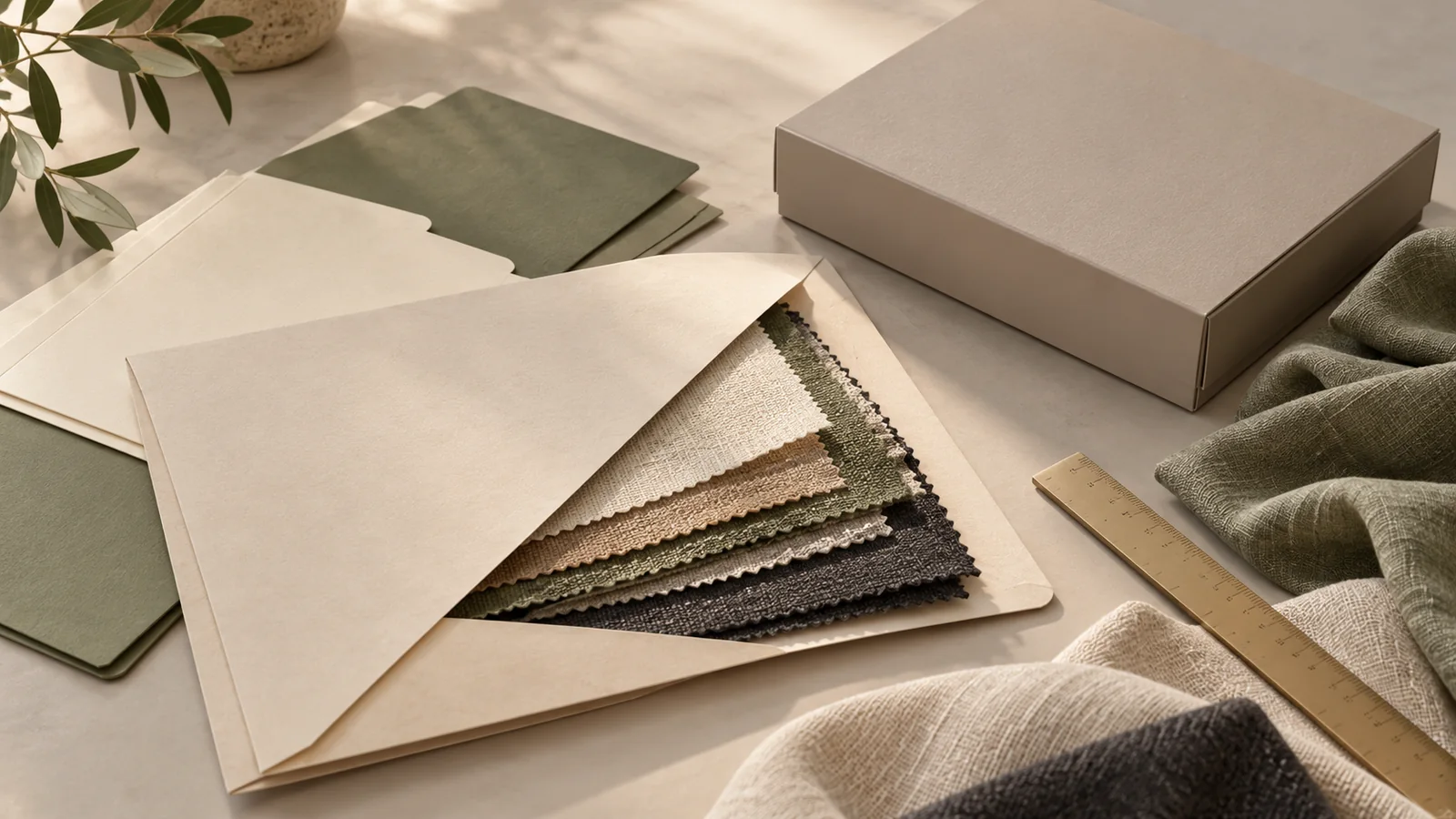
A sample relevant to your material and fit is more useful than an unrelated polished garment. Do not treat AI concept images, stock photography or ordinary sewing footage as customer project proof.
Review documents in context
If a certificate or report is offered, check the named entity, scope, date and verification route with the issuer where appropriate. A document about a material is not automatically a factory certification, and a historical result is not proof of every current product.
For inspection, ISO 2859-1:2026: acceptance sampling by attributes is an example of a defined framework rather than a generic quality badge. Ask who performs the work and how the result relates to your lot. Do not accept the word AQL as evidence that an inspection actually occurred.
Make commercial assumptions visible
Confirm MOQ basis, material minimums, sample cost, approvals, timing, packing and freight. The website’s 100+ pcs catalogue minimum and 150+ pcs custom OEM/ODM minimum does not answer every combination question. Ask for a written quotation tied to your actual brief.
Clarify how nonconformities and changes will be handled. A promise of perfect quality is less useful than an agreed process for identifying, documenting and resolving a verified issue.
Use an evidence register rather than a beauty contest
Create columns for claim, source, date, relevance and unresolved question. Mark gaps honestly. A supplier may be suitable while still needing to provide a document; a visually impressive page may leave fundamental questions unanswered.
This checklist is not a supplier ranking or a guarantee against every risk. It is a practical way to keep your decision tied to evidence and to avoid confusing marketing presentation with verified capability.
Ask for evidence proportionate to the claim
Separate identity, capability and order-specific performance. A business document may help establish who the supplier is, but it does not demonstrate that a particular garment meets the buyer’s requirements. A workshop photograph may show a process, but it does not establish capacity, ownership or a quality outcome without supporting context.
For material or product claims, ask which reference was tested, by whom and under what conditions. Check whether the evidence concerns the actual proposed material or an unrelated sample. Where certification is relevant, verify its scope and current applicability through appropriate channels rather than treating a logo in a presentation as sufficient.
Keep requests focused. A long generic questionnaire can create the appearance of diligence while leaving the key product risks unanswered. Start with the claims that matter to the order and record whether the evidence supports them, partly supports them or remains missing.
Turn a supplier conversation into a verification plan
Imagine a hypothetical supplier offering broad customization and a quick schedule. Ask for a concrete sample route using the buyer’s actual brief. Confirm what the supplier needs, which approvals precede production and which timing assumptions remain provisional. A clear explanation of limitations can be more useful than an unrestricted promise.
Compare the response with the quotation and sample documentation. If different documents use different minimum conditions, material references or approval stages, resolve the inconsistency before committing. The goal is not to assume bad intent; it is to prevent misunderstandings from becoming order problems.
Record unresolved items with an owner and next action. Do not mark a claim verified merely because the supplier has acknowledged the question. Likewise, do not present a third-party factory image as evidence of the supplier’s own facility. The checklist is complete only when the buyer can distinguish known facts from remaining assumptions.
Decision checklist
| Claim | Relevant evidence | Insufficient substitute |
|---|---|---|
| Identity | Contracting records and verified contact | Logo alone |
| Fit capability | Relevant sample and revision process | Generic model image |
| Quality | Order-specific plan and records | AQL badge |
| Capacity and timing | Confirmed scope and schedule | Unqualified large number |
Frequently asked questions
Does a factory video prove ownership?
Not by itself. Verify the business and production relationship separately.
Should I reject every supplier with missing website data?
No. Request relevant evidence and evaluate the response; absence online is not proof either way.
Can a certificate cover all products?
Only within its actual scope; verify what it applies to.
What should remain pending before an order?
Any unresolved item that materially affects identity, specification, quality or commercial risk should be addressed explicitly.
Sources & scope
- ISO 2859-1:2026: acceptance sampling by attributes
Public scope reviewed; no sampling tables reproduced or universal AQL prescribed. Source date: 2026. Checked 23 October 2026.
Your next step
Prepare questions for a factory discussion →For your collection, confirm the style’s size chart and specifications. S–8XL is an overall development range, not a US size conversion.
Browse styles · Development services