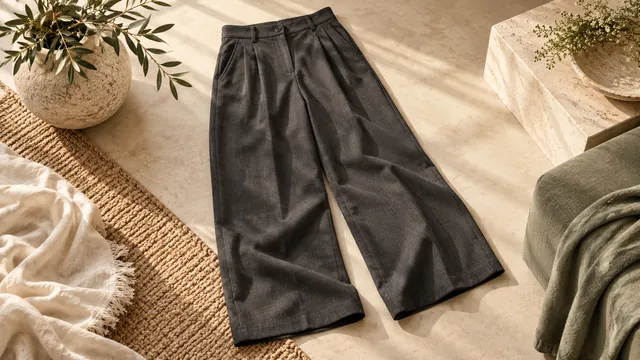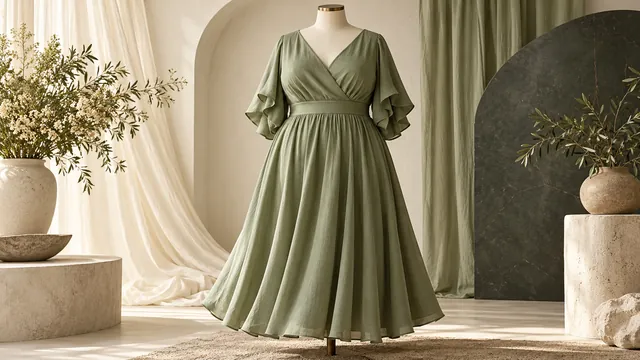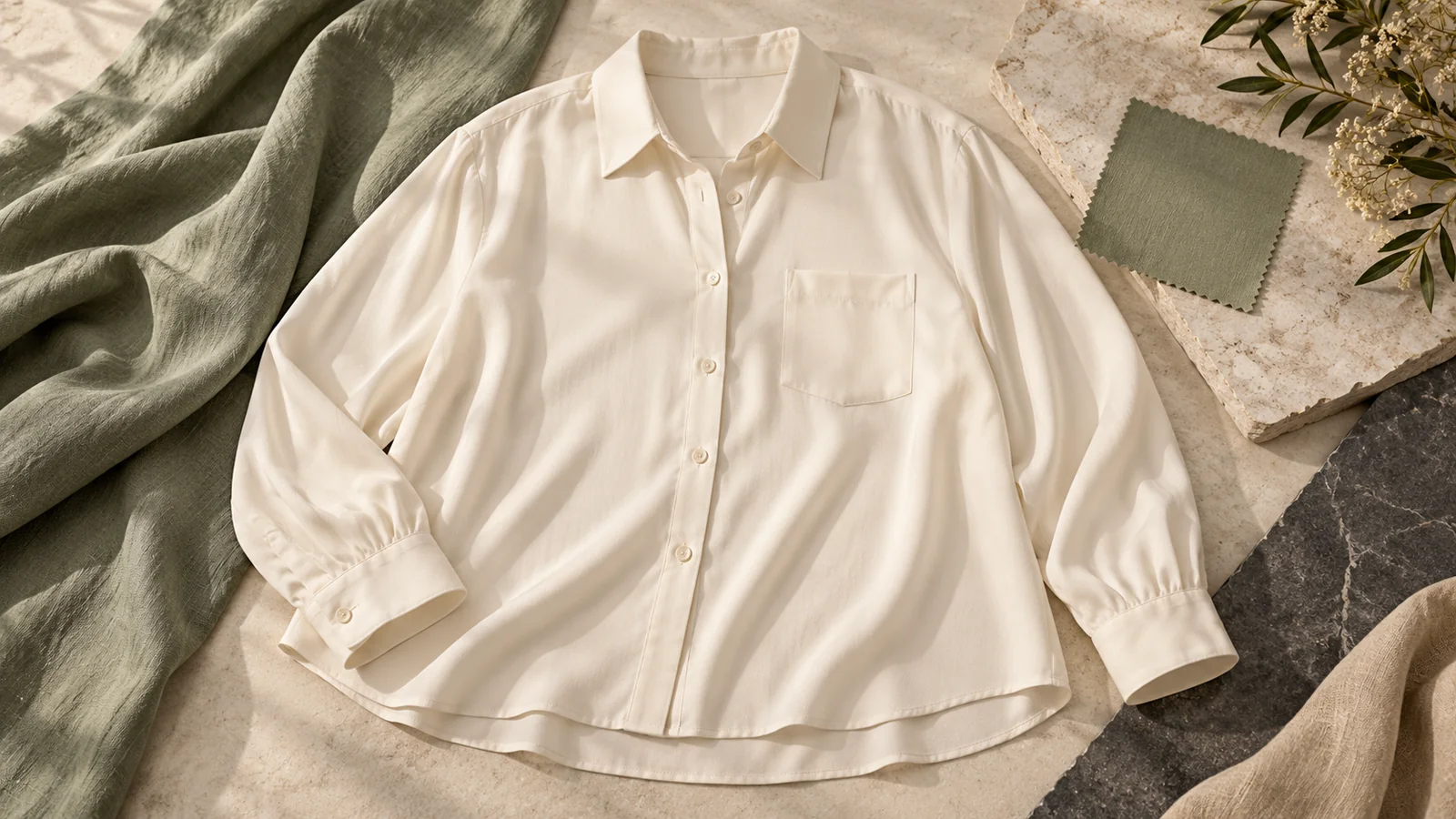
Key takeaways
- Select distinct silhouettes rather than colour duplicates.
- Review the top in its intended wearing position.
- Treat an attractive image as a starting point, not a specification.
First screen: a clear role in the collection
Give each candidate a job: an everyday base, a structured shirt, a seasonal layer or a design-led piece. If two candidates serve the same role with almost identical construction, explain why both are needed. Without sales evidence, do not call either a bestseller or buyer favourite.
Record the source SKU and image so development comments stay attached to the correct garment. FORMIVA’s development concepts are discussion references, not proof of stock, final fabric or measured fit.
Second screen: proportions and movement
Review shoulder placement, bust room, upper sleeve and armhole together. Ask whether the intended customer will tuck the top, wear it loose or use it as a layer. Hem length and side-slit decisions depend on that use.
For button fronts, assess closure behaviour during relevant movement. For pullovers, consider entry and neckline recovery. Avoid judging a top only from a front-standing image; identify the side, back or construction information that is still missing.
Third screen: material and assembly
Confirm composition, construction, finish and the material’s relevant behaviour. A soft-looking image does not prove a soft handle. A rib texture does not prove a particular extension or recovery. Request an actual material reference before confirming performance language.
Review seams, collar or neckline finish, cuffs and any contrast components. The CottonWorks: textile learning hub hub supports material terminology; the shortlist criteria here are editorial purchasing recommendations rather than laboratory findings.
Fourth screen: commercial readiness
Ask which colours and sizes are confirmed, what remains a development proposal and how the quantity mix affects the quotation. Keep MOQ and component minimums separate. A large palette can create shallow stock and additional approval work.
Estimate the work needed to make each candidate order-ready. One differentiated style with a clear development route may be more valuable than several visually similar candidates with unknown specifications.
Make the shortlist usable
For each selected top, write one reason to sample, one main risk and one evidence request. Reject or defer candidates that cannot be distinguished except by a colour change. This keeps the buying conversation focused.
The checklist does not rank suppliers or predict sales. It helps you choose samples deliberately and prevents catalogue presentation from becoming an unsupported promise about fit, fabric or availability.
Use the checklist to remove redundant styles
Lay out the proposed tops by silhouette, sleeve, neckline, material and intended use. Two styles that look different in a colour thumbnail may serve almost the same role. Conversely, similar-looking garments can have meaningfully different construction or wearing characteristics. Review actual specifications and sample details rather than relying on names alone.
Choose a representative basic, a seasonal option and a differentiated design only where each has a clear role. These are editorial assortment roles, not claims about sales. Avoid filling a target count with minor colour changes or nearly identical silhouettes. Colours belong within a style’s variant plan unless the construction genuinely differs.
For each selected style, list the approval questions that remain. A neckline, upper sleeve, closure or hem can require focused review. This converts the assortment board into a development plan, helping the buyer see which styles are ready to quote and which still need substantial work.
Make a small selection review auditable
In a hypothetical review, a buyer shortlists three blouses for the same channel. Record why each survives: a distinct use, a construction feature or a different material direction. If the reason is simply that the photograph is appealing, ask what product evidence is missing before committing.
Request the real size chart and material details for the specific style. Do not copy an overall factory range onto every item. Check whether the available image shows the hem, sleeve and closure clearly enough for selection; if it does not, request a better reference rather than guessing the hidden structure.
At the final shortlist, distinguish “selected for sampling” from “approved for bulk.” This prevents a merchandising decision from being mistaken for technical approval. A concise selection record should show the intended role, known facts, open questions and next approval step for every retained top.
Decision checklist
| Checkpoint | Pass to sampling when | Defer when |
|---|---|---|
| Collection role | The style adds a distinct use or silhouette | It duplicates another candidate |
| Fit question | Key proportion and movement needs are defined | Only a styled front image is available |
| Material | A real article can be reviewed | Performance is inferred from a photo |
| Commercial scope | Quantity and open approvals are understood | Availability is assumed |
Frequently asked questions
Do different colours count as different styles?
Not for this selection exercise; keep them as variants of the same design.
Should every top cover the same hip level?
No. Define the intended styling and customer use for each silhouette.
Can I shortlist a style with missing back images?
Yes as a development question, but do not invent the hidden structure or call it confirmed.
How many tops should a first collection include?
Use budget, differentiation and evidence quality; this checklist does not prescribe a universal count.
Sources & scope
- CottonWorks: textile learning hub
Construction terminology reference; purchasing recommendations are editorial analysis. Publication date not stated. Checked 23 October 2026.
Your next step
Explore tops to discuss →For your collection, confirm the style’s size chart and specifications. S–8XL is an overall development range, not a US size conversion.
Browse styles · Development services